
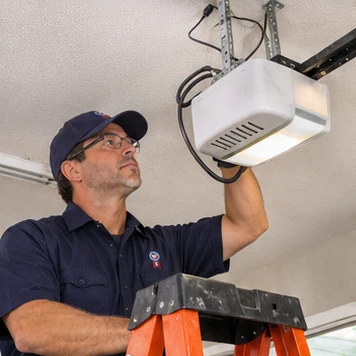
Start with what the opener does
A door that starts to close and then reverses may have a sensor issue, an obstruction, or a mechanical problem. A response from the keypad but silence from the remote narrows the possibilities in a different way. If the rail shakes when the motor starts or the door gets stuck at the same height, describe that detail when you call. Give us any steady or blinking indicator light you noticed from a safe spot.
If garage door repair near me was your first search after an unexpected stop, write down which control you used and whether the opener made noise. A photo of the model label from floor level can help with compatibility. Leave a door that is hanging at an angle where it is and keep the area clear.
What we check during diagnosis
We inspect the opener controls and drive components and check whether the door itself is traveling smoothly. An opener relies on a working counterbalance. A sticking track or an out-of-balance door can strain the motor and leave symptoms that look electrical. For the mechanical side of that diagnosis, see our spring repair and garage door track repair pages.
Where practical, an assessment can identify a specific problem with the sensors, wall controls, wiring or a compatible drive part. The model and the condition of the unit help determine whether a repair is practical. If parts are unavailable or several components are worn, we can explain what a compatible replacement would need to do and which accessories might carry over.
What to ask before booking
When comparing a garage door repair service near me, ask whether the visit includes both the opener and the door hardware. Also ask whether the model supports the controls you use every day, such as a keypad or vehicle remote. For garage door repair in Saratoga, CA, call (669) 336-4058 with the make and model if available. For an attached garage that serves as your main entry, mention any access constraints when setting up a visit.
Opener repair FAQs
Why does my door open but fail to close?
The safety sensors or their wiring may be involved. Track binding, travel problems, and obstructions can also cause a reversal.
Is a dead remote a sign that I need a motor?
A battery, handheld remote or pairing issue may be the cause. Note whether the wall control still works so we can narrow the problem.
Why does the opener move the door only a few inches?
A heavy or obstructed door can trigger a stop. We check the door hardware and counterbalance as part of diagnosing the opener.
Can I keep my old remotes after a replacement?
Compatibility depends on the receiver and the remote model. Share the model labels if keeping those controls matters to your household.
What gets checked after the repair?
A visit can include checking the door’s full travel, the intended controls, and applicable safety reversal and sensor functions for that model.